




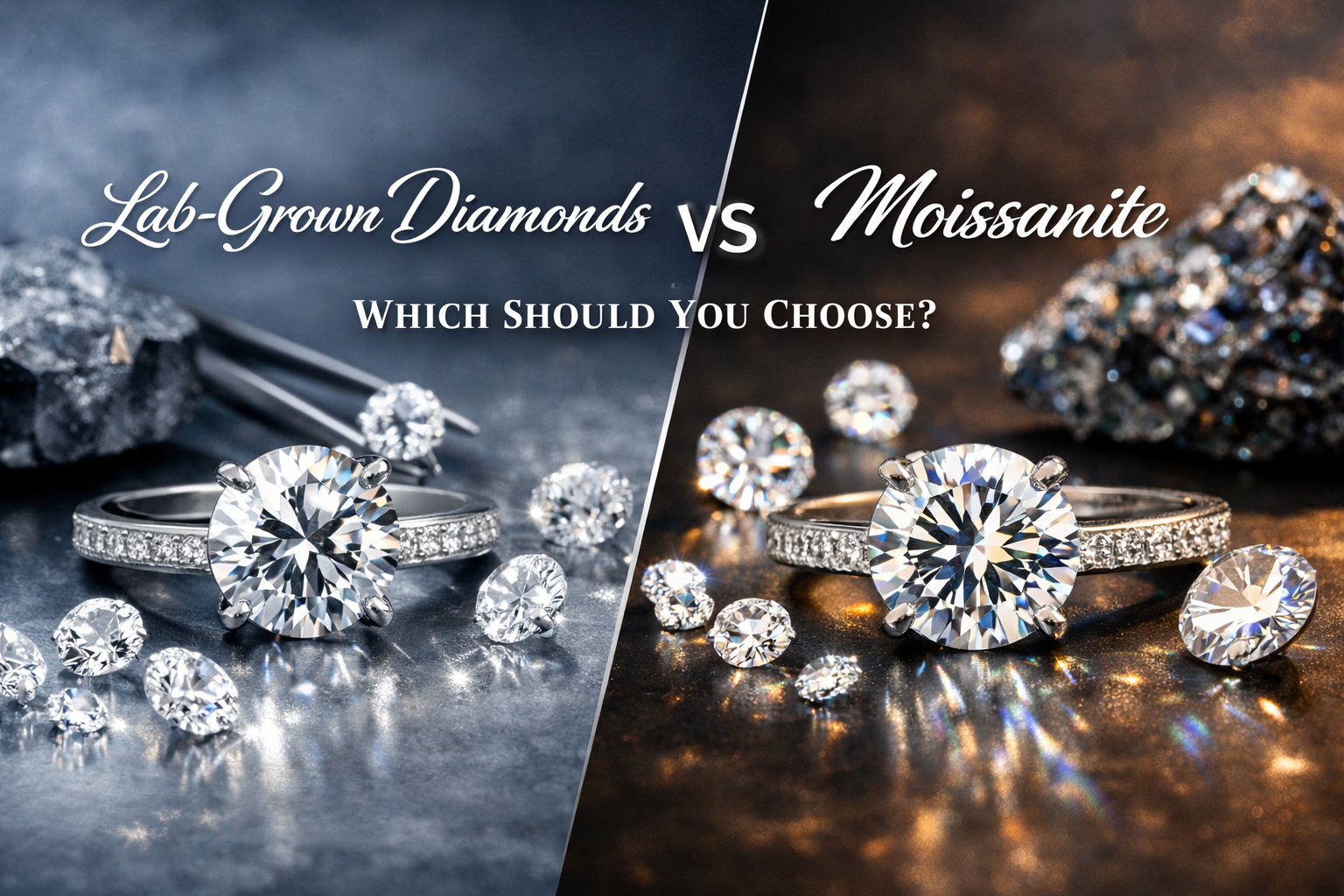
When shopping for an engagement ring or fine jewelry, one comparison dominates the conversation: Lab-Grown Diamonds vs Moissanite. Both stones offer brilliance, ethical sourcing, and a budget-friendly alternative to mined diamonds — but they are fundamentally different in composition, sparkle, durability, and long-term value.
If you're confused about which option fits your style, budget, and long-term expectations, this detailed guide will help you confidently understand Lab-Grown Diamonds vs Moissanite before making a final decision.
At D218 Jewels, customers frequently ask about Lab-Grown Diamonds vs Moissanite, especially when selecting engagement rings. Let’s break everything down in simple, practical, and buyer-friendly terms.
What Are Lab-Grown Diamonds?
When discussing Lab-Grown Diamonds vs Moissanite, it’s important to first understand what lab-grown diamonds truly are. Lab-grown diamonds are real diamonds created in highly advanced laboratories using High Pressure High Temperature (HPHT) or Chemical Vapor Deposition (CVD) technology. These methods replicate the exact natural conditions under which diamonds form beneath the Earth’s surface.
From a scientific perspective, lab-grown diamonds have:
The same chemical composition (pure carbon crystal structure)
The same hardness of 10 on the Mohs scale
The same brilliance, fire, and scintillation
The same durability for everyday wear
The only difference in the Lab-Grown Diamonds vs Moissanite comparison is origin. Natural diamonds take billions of years to form, while lab-grown diamonds are created in just a few weeks under controlled conditions.
Because they are physically and optically identical to mined diamonds, lab-grown diamonds are graded and certified just like natural stones. They offer the luxury look of a traditional diamond at a more accessible price point, making them increasingly popular among modern couples.
If you're looking for authentic diamond sparkle at a better value, explore the stunning collection of lab-grown diamond engagement rings at D218 Jewels. Their premium-quality designs are crafted for couples who want brilliance, sustainability, and long-term value without compromise.
In the debate of Lab-Grown Diamonds vs Moissanite, lab-grown diamonds remain the ideal choice for buyers who want a genuine diamond experience.
What Is Moissanite?
To fully understand Lab-Grown Diamonds vs Moissanite, you also need to know what makes moissanite unique. Moissanite is a gemstone composed of silicon carbide. It was originally discovered in a meteor crater, but today nearly all moissanite used in jewelry is lab-created, making it ethical and environmentally responsible.
Moissanite is known for:
Exceptional brilliance (often more fiery than diamonds)
High durability (9.25 on the Mohs scale)
Strong resistance to scratching and chipping
A budget-friendly price point
In the Lab-Grown Diamonds vs Moissanite comparison, one noticeable difference is sparkle. Moissanite produces more rainbow-colored flashes (fire), which can appear more dramatic under certain lighting conditions. Some buyers love this bold brilliance, while others prefer the classic white sparkle of diamonds.
Another major advantage of moissanite is cost efficiency. It allows buyers to choose a larger stone size within the same budget. While it is not chemically a diamond, it remains one of the most popular diamond alternatives in the market today.
If you love extra sparkle and want maximum visual impact for your budget, browse the elegant collection of moissanite jewelry at D218 Jewels. Each piece is carefully crafted to deliver bold brilliance and modern sophistication.
When comparing Lab-Grown Diamonds vs Moissanite, the best choice ultimately depends on whether you prioritize authentic diamond composition or dramatic sparkle and affordability.
Lab-Grown Diamonds vs Moissanite: Key Differences

Understanding Lab-Grown Diamonds vs Moissanite requires comparing them across the most important buying factors. While both stones are beautiful, ethical, and budget-friendly alternatives to mined diamonds, they differ in composition, sparkle, pricing, and long-term perception. Below is a detailed breakdown to help you make an informed decision.
1. Appearance and Sparkle
When evaluating Lab-Grown Diamonds vs Moissanite, appearance is usually the first thing buyers notice.
Lab-Grown Diamonds
Offer white brilliance similar to natural diamonds
Produce a classic, timeless sparkle
Display subtle rainbow flashes (fire)
Look identical to mined diamonds to the naked eye
Lab-grown diamonds reflect light in a balanced way, giving them that traditional engagement ring glow most people expect.
Moissanite
Higher refractive index than diamonds
Produces more rainbow-colored fire
Can appear extra flashy under bright lighting
Slightly different sparkle pattern compared to diamonds
In the Lab-Grown Diamonds vs Moissanite debate, moissanite tends to sparkle more dramatically, especially in sunlight or LED lighting. Some buyers love this bold brilliance, while others prefer the understated elegance of a real diamond look.
If you want a traditional aesthetic that aligns with evolving bridal preferences, you can explore modern styles in this guide on top engagement ring trends by D218 Jewels.
Ultimately, your choice depends on whether you prefer timeless sophistication or eye-catching brilliance.
2. Durability and Hardness
Durability is essential when comparing Lab-Grown Diamonds vs Moissanite, especially for engagement rings worn daily.
Hardness Comparison:
Lab-grown diamonds: 10/10 on the Mohs scale
Moissanite: 9.25/10 on the Mohs scale
Because lab-grown diamonds are made of pure carbon, they are the hardest known gemstone. This makes them extremely resistant to scratches and suitable for lifelong wear.
Moissanite is also very durable and resistant to chipping or cracking. With a 9.25 rating, it is harder than most gemstones used in jewelry, including sapphire and ruby.
In practical terms, both stones are strong enough for everyday use. However, in the Lab-Grown Diamonds vs Moissanite comparison, diamonds hold a slight advantage in scratch resistance.
At D218 Jewels, both lab-grown diamond and moissanite engagement rings are carefully crafted with secure settings and premium materials to ensure longevity. With proper care and cleaning, either option can last for generations without losing brilliance.
3. Price Comparison
Price is one of the biggest decision-making factors in Lab-Grown Diamonds vs Moissanite.
Moissanite:
Typically 70–90% cheaper than natural diamonds
More affordable than lab-grown diamonds
Allows you to choose a larger carat size within budget
Lab-Grown Diamonds:
Cost more than moissanite
Significantly less expensive than mined diamonds
Offer real diamond authenticity at a reduced price
If budget is your top concern, moissanite provides maximum size and sparkle for less money. However, in the Lab-Grown Diamonds vs Moissanite comparison, lab-grown diamonds justify their higher price because they are chemically and structurally real diamonds.
Many modern couples are balancing budget and luxury, which is why lab-grown diamonds are trending across the U.S. You can explore top jewelry market trends here:
Both options provide excellent value — the decision depends on whether you prioritize authenticity or affordability.
4. Value and Resale
Another important aspect of Lab-Grown Diamonds vs Moissanite is long-term value perception.
Lab-Grown Diamonds:
Classified as real diamonds
More socially recognized as diamonds
Limited resale value compared to natural diamonds
Better perceived value than moissanite
Moissanite:
Not classified as a diamond
Lower resale value
Typically purchased for beauty, not investment
In reality, when comparing Lab-Grown Diamonds vs Moissanite, neither stone should be viewed primarily as a financial investment. Like most jewelry, they are best chosen for emotional significance and personal style.
Lab-grown diamonds may hold stronger long-term recognition because they are genuine diamonds. Moissanite, on the other hand, excels as a budget-conscious luxury option.
The smarter approach is to choose the stone that aligns with your values, aesthetic preference, and lifestyle rather than resale expectations.
5. Ethical and Environmental Impact
Sustainability is a major reason buyers compare Lab-Grown Diamonds vs Moissanite.
Both Options Offer:
No destructive mining
Conflict-free sourcing
Lower environmental impact than mined diamonds
Transparent production processes
Lab-grown diamonds eliminate the environmental disruption associated with traditional mining. Moissanite, being lab-created, also avoids ecological damage and ethical concerns tied to diamond extraction.
In the Lab-Grown Diamonds vs Moissanite discussion, both are considered responsible, modern choices. This makes them especially attractive to younger generations who value sustainability and conscious consumption.
At D218 Jewels, responsibly crafted collections ensure that customers can choose either lab-grown diamonds or moissanite with confidence, knowing their jewelry reflects both luxury and ethical responsibility.
Lab-Grown Diamond Engagement Rings: Pros and Cons
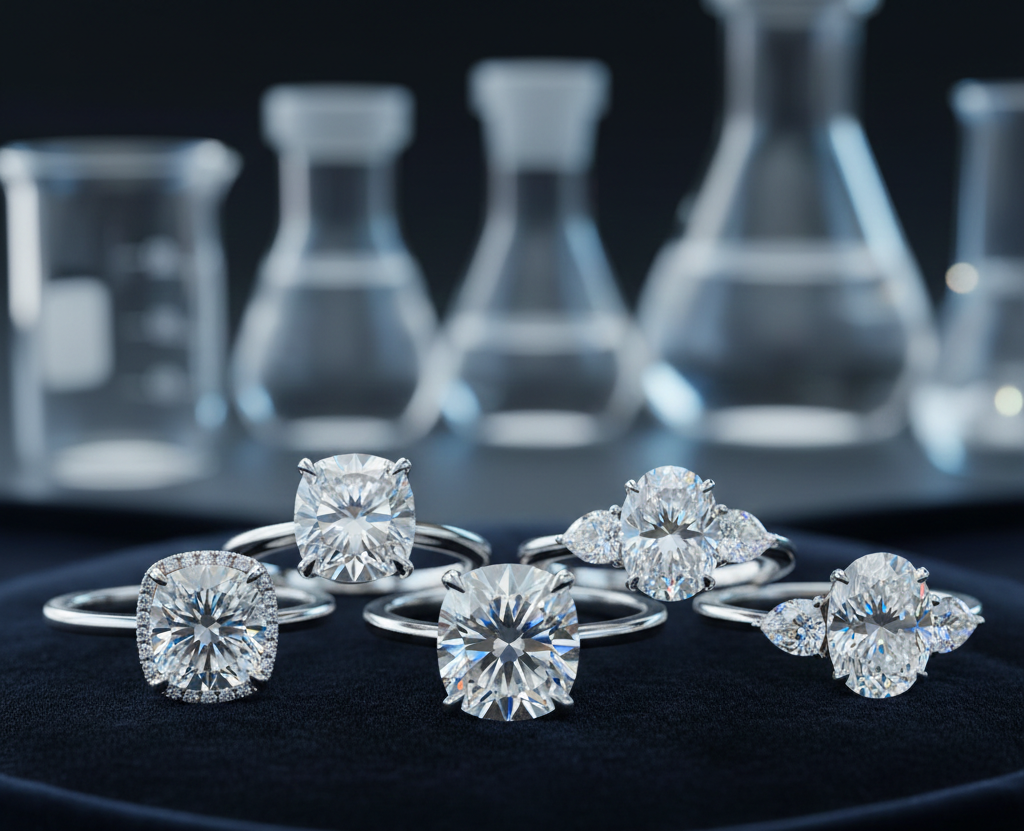
When comparing Lab-Grown Diamonds vs Moissanite, lab-grown diamond engagement rings are often chosen by couples who want authenticity, tradition, and long-term durability. Lab-grown diamonds are chemically and physically identical to natural diamonds, meaning they offer the same brilliance, hardness, and overall luxury appeal — just created in a controlled laboratory environment.
Pros
1. Real diamond composition – In the Lab-Grown Diamonds vs Moissanite comparison, lab-grown diamonds are 100% real diamonds made of carbon. They are graded and certified like mined diamonds.
2. Classic engagement ring look – They reflect light with balanced white brilliance, giving a timeless and elegant appearance. This makes them ideal for traditional solitaires and halo settings.
3. Higher durability – With a 10/10 rating on the Mohs scale, they are extremely resistant to scratches and suitable for daily wear over decades.
4. Stronger social recognition – Because they are real diamonds, they carry higher perceived prestige compared to moissanite.
Cons
1. More expensive than moissanite – In the Lab-Grown Diamonds vs Moissanite debate, lab-grown diamonds cost more upfront.
2. Lower resale value compared to natural diamonds – While authentic, resale demand is still evolving.
In the Lab-Grown Diamonds vs Moissanite discussion, lab-grown diamond rings are perfect for buyers who want true diamond luxury at a better value than mined stones.
Moissanite Engagement Rings: Pros and Cons
In the ongoing discussion of Lab-Grown Diamonds vs Moissanite, moissanite engagement rings continue to gain popularity — especially among modern couples who want maximum sparkle at a practical price. While moissanite is not a diamond, it is a high-quality gemstone made from silicon carbide and created in controlled laboratory environments. This makes it both ethical and environmentally responsible, which is an important factor in today’s jewelry market.
Understanding the advantages and limitations of moissanite is essential when comparing Lab-Grown Diamonds vs Moissanite, particularly if you’re shopping for an engagement ring meant for daily wear.
Pros of Moissanite Engagement Rings
1. Extremely Affordable
One of the biggest advantages in the Lab-Grown Diamonds vs Moissanite comparison is price. Moissanite is significantly less expensive than both mined and lab-grown diamonds. This allows buyers to either save money or invest in a larger center stone without stretching their budget.
2. Brilliant Sparkle
Moissanite has a higher refractive index than diamonds, meaning it bends light more intensely. As a result, it produces strong rainbow flashes (fire) and eye-catching brilliance. In the Lab-Grown Diamonds vs Moissanite debate, moissanite often appears more sparkly under bright lighting.
3. Looks Larger for the Price
Because moissanite costs less per carat, buyers can choose bigger stones for the same budget. Visually, this can create a bold and impressive engagement ring look.
4. Ethical and Eco-Friendly
Moissanite is lab-created, so there is no mining damage or conflict concerns — a key benefit when evaluating Lab-Grown Diamonds vs Moissanite from a sustainability perspective.
Cons of Moissanite Engagement Rings
1. More Rainbow Fire
While many people love its sparkle, others feel the strong rainbow flashes look overly flashy compared to the balanced white brilliance of diamonds.
2. Not a Real Diamond
A major difference in Lab-Grown Diamonds vs Moissanite is composition. Moissanite is not made of carbon and is not classified as a diamond.
3. Slightly Softer Than Diamond
With a hardness of 9.25 on the Mohs scale, moissanite is very durable but still slightly softer than lab-grown diamonds (10/10). Over decades, diamonds may resist scratches slightly better.
Which One Looks More Expensive?
When comparing Lab-Grown Diamonds vs Moissanite, many buyers naturally ask which stone appears more luxurious. In most cases, lab-grown diamonds tend to look more expensive because they display the same light performance as natural diamonds. Their brilliance is crisp, white, and well-balanced, with subtle fire rather than intense rainbow flashes. This controlled sparkle creates a refined and classic appearance that people traditionally associate with high-end engagement rings.
In the Lab-Grown Diamonds vs Moissanite debate, perception plays a major role. Because lab-grown diamonds are chemically and visually identical to mined diamonds, they carry the “real diamond” identity. That recognition alone often makes them feel more premium in social and cultural settings.
Moissanite, on the other hand, has a higher refractive index, which produces stronger rainbow fire. Under bright lighting, this can look extremely dramatic and eye-catching. Some buyers love this bold brilliance and see it as extra glamorous. Others feel it looks less traditional compared to the subtle elegance of diamonds.
Ultimately, in the Lab-Grown Diamonds vs Moissanite comparison, lab-grown diamonds usually win in perceived luxury — but a high-quality moissanite in a well-crafted setting can still look equally stunning to most people.
Who Should Choose Lab-Grown Diamonds?
In the discussion of Lab-Grown Diamonds vs Moissanite, lab-grown diamonds are ideal for buyers who prioritize authenticity and timeless appeal.
Choose lab-grown diamonds if you:
Want a real diamond with true carbon composition
Prefer traditional white brilliance over strong rainbow fire
Care about maximum hardness and scratch resistance (10/10 on Mohs scale)
Want something visually identical to natural diamonds
Lab-grown diamonds are especially suitable for classic solitaires, halo designs, and elegant vintage-inspired rings. They align perfectly with buyers who value status, tradition, and long-term durability.
To explore trending cuts such as oval, round, cushion, and emerald styles, visit
Most popular engagement ring shape.
In the overall Lab-Grown Diamonds vs Moissanite comparison, lab-grown diamonds are best for those who want genuine diamond beauty without paying mined-diamond prices.
Who Should Choose Moissanite?
In the broader Lab-Grown Diamonds vs Moissanite conversation, moissanite is ideal for buyers who value sparkle and budget flexibility.
Choose moissanite if you:
Want maximum brilliance and fire
Have a tighter budget
Prefer a larger carat size for the same investment
Don’t mind that it isn’t classified as a diamond
Moissanite is practical, durable (9.25 on the Mohs scale), and highly resistant to everyday wear. It offers impressive visual impact at a fraction of the cost of diamonds.
When deciding between Lab-Grown Diamonds vs Moissanite, the final choice depends on what matters most to you: authentic diamond identity and classic elegance, or bold sparkle and greater affordability.
Final Thought
The decision between lab grown diamonds vs moissanite ultimately depends on your priorities.
If you want authenticity and classic diamond appeal — choose lab-grown diamonds.
If you want affordability and bold brilliance — choose moissanite.
Both are beautiful. Both are ethical. Both are modern.
At D218 Jewels, you can explore expertly crafted lab-grown diamond and moissanite collections designed for today’s generation of smart buyers.
No matter what you choose, the right ring is the one that reflects your love story.
FAQs
What is the main difference between lab grown diamonds vs moissanite?
The main difference between lab grown diamonds vs moissanite is their composition. Lab-grown diamonds are real diamonds made of carbon, just like natural diamonds. Moissanite is made of silicon carbide and is a completely different gemstone. While both are created in laboratories and are ethical options, lab-grown diamonds have the same physical and chemical properties as mined diamonds.
Do lab-grown diamonds look better than moissanite?
It depends on personal preference. Lab-grown diamonds have a classic, white sparkle similar to natural diamonds. Moissanite produces more rainbow-colored flashes due to its higher refractive index. In the lab grown diamonds vs moissanite comparison, those who prefer a traditional diamond look usually choose lab-grown diamonds, while those who love extra sparkle often choose moissanite.
Can you tell the difference between lab-grown diamonds and moissanite?
Accordion CoTo the naked eye, it can be difficult for most people to tell the difference. However, under professional testing equipment, gemologists can easily identify them. In everyday wear, high-quality stones from D218 Jewels are designed to look stunning regardless of your choice.ntent
Which is more durable: lab-grown diamonds or moissanite?
When comparing lab grown diamonds vs moissanite, lab-grown diamonds rank 10 on the Mohs hardness scale, while moissanite ranks around 9.25. Both are extremely durable for daily wear, but lab-grown diamonds are slightly more scratch-resistant.
Is moissanite cheaper than lab-grown diamonds?
Yes, moissanite is generally more affordable. It can cost significantly less than lab-grown diamonds of the same size. If budget is your top priority in the lab grown diamonds vs moissanite debate, moissanite offers excellent value for money.