




Buying an engagement ring online gives you wider diamond inventory, transparent pricing, and side-by-side comparison tools that traditional showrooms rarely match. Whether you are shopping from the United States, the United Kingdom, or Australia, a structured checklist keeps you focused on quality, legal protections, and fair value—without overlooking regional details like ring sizing systems, hallmarking laws, or import taxes.
Use this step-by-step checklist to evaluate the 4Cs of Diamond Quality, verify independent grading reports, vet online jewelers, and inspect your ring once it arrives.
Quick-Scan Master Checklist
Track each step to buy engagement ring online before you place your order:
All-In Budget: Account for the center stone, setting, local sales tax/VAT/GST, and any cross-border import duties.
Stone Origin: Decide between a natural diamond, a laboratory-grown diamond, or a colored gemstone.
4Cs Priority: Prioritize cut quality first, then balance color, clarity, and carat weight.
Independent Lab Report: Insist on a grading report from GIA or IGI—never rely solely on an in-house appraisal.
Database Verification: Enter the report number directly into the lab’s official verification portal before checkout.
Visual Inspection: Inspect 360-degree HD videos under neutral lighting rather than stock renders.
Setting, Metal & Hallmarks: Pick a durable band metal and confirm legal hallmarking if buying in the UK.
Regional Ring Size: Match US numerical sizes or UK/Australia alphabetical sizes using inner-diameter millimeter measurements.
Returns & Shipping: Confirm return windows (especially for bespoke/custom designs), insured shipping, and written warranties.
Post-Delivery Verification: Match the girdle laser inscription under 10x magnification and insure the ring before proposing.
1. Set an All-In Budget (Including Regional Taxes and Duties)
Skip outdated marketing formulas about spending two or three months’ salary. As the Gemological Institute of America (GIA) buying guide advises, set firm financial parameters before browsing so your shortlist stays realistic.
When shopping online—especially from an overseas jeweler—budget for four components:
- Center stone (usually the largest share of the budget)
- Setting and side stones (solitaire bands cost less than pavé or halo designs)
- Taxes and import fees:
- USA: State and local sales tax applied at checkout (plus customs duties if importing directly from abroad).
- UK: VAT and applicable customs charges on overseas shipments.
- Australia: Under Australian Border Force guidelines, overseas goods valued at AUD $1,000 or less generally have GST collected at the point of sale, while orders over AUD $1,000 require an Import Declaration with duties, GST, and import processing charges payable at the border.
- Jewelry insurance and appraisal right after delivery.
2. Choose Between Natural and Lab-Grown Diamonds
Natural and laboratory-grown diamonds share the same chemical, physical, and optical properties and are graded on the same 4Cs scale by IGI and GIA. Your decision comes down to budget, rarity, and personal preference.
| Factor | Natural Diamonds | Laboratory-Grown Diamonds |
|---|---|---|
| Origin | Formed naturally deep within the earth | Created in controlled laboratory environments |
| Grading Standard | Graded on the 4Cs (GIA, IGI) | Graded on the same 4Cs (IGI, GIA) |
| Budget Impact | Higher cost per carat due to natural rarity | Generally lower cost per carat, allowing larger or higher-grade stones |
| Disclosure Rules | Must be accurately represented under FTC Jewelry Guides and local consumer laws | Must be clearly disclosed as lab-grown—never blurred with natural stones or simulants (FTC guidance) |
3. Master the 4Cs—and Know Where to Save
The GIA 4Cs—Cut, Color, Clarity, and Carat Weight—provide an objective way to compare diamonds across online retailers.
| Factor | What It Measures | Smart Online Buying Strategy |
|---|---|---|
| Cut | Proportions, symmetry, polish, and light performance (Excellent to Poor for round brilliants) | Prioritize this first. GIA notes that a diamond’s beauty and brilliance depend more on cut quality than any other factor. |
| Color | Absence of yellow or brown tint on the D-to-Z scale | Save with near-colorless grades. Near-colorless diamonds often appear white face-up, especially in yellow or rose gold bands. |
| Clarity | Internal inclusions and surface blemishes (Flawless to Included) | Aim for “eye-clean.” Use magnified 360-degree videos to avoid dark inclusions centered under the table. |
| Carat Weight | Metric weight (1 carat = 0.2 grams / 200 mg, divided into 100 points) | Shop just under “magic sizes.” As GIA explains, a 0.90–0.99 ct stone looks virtually identical to a 1.00 ct diamond at a lower price. |
Tip: Carat measures weight, not face-up size. Always check the millimeter dimensions on the lab report so you know how wide the stone will look on the finger.
4. Verify Independent Certification Before You Pay
Never rely solely on a store’s in-house grading certificate. Insist on an independent grading report from a respected laboratory such as GIA or IGI, then verify it yourself:
- Locate the unique report number on the listing or sample certificate.
- Go directly to GIA Report Check or IGI Report Verification—not through a third-party link.
- Confirm that the carat weight, shape, measurements, color, clarity, cut grade, and any disclosed treatments match the retailer’s product page line by line.
5. Pick the Right Setting, Metal, and Regional Hallmarks
Match the setting to your partner’s daily routine: solitaires are timeless and easy to maintain, halos add visual size, pavé bands deliver extra sparkle (requiring periodic prong checks), and bezel settings protect the diamond’s edges for active lifestyles.
Band Metal Comparison (US, UK & Australia)
| Metal | Durability & Feel | Maintenance | Regional Notes |
|---|---|---|---|
| Platinum | Dense, naturally white, and hypoallergenic; develops a soft patina | No rhodium replating needed; can be polished | Must carry a UK Assay Office hallmark at 0.5g and over (GOV.UK) |
| 18K / 18ct Gold | Richer gold purity (75% gold); slightly softer than 14K | Periodic polishing; white gold needs occasional rhodium replating | Widely favored in the UK and Australia; UK gold items 1g and over require hallmarking (GOV.UK) |
| 14K / 9ct Gold | Higher alloy content makes bands harder and more budget-friendly | Low maintenance; white gold requires periodic rhodium replating | 14K is the most common US choice; 9ct (37.5% gold) is widely available in the UK and Australia |
6. Nail the Ring Size Across US, UK, and Australian Charts
Ring sizing is one of the easiest mistakes to make when ordering from an international jeweler:
- United States uses numerical sizes (e.g., 5, 6, 7, with half and quarter sizes).
- United Kingdom and Australia use alphabetical sizes (e.g., J, L, N, with half sizes like L½).
To avoid conversion errors between retailers, always confirm the inner diameter in millimeters (mm) rather than guessing a letter-to-number match. Borrow a ring your partner wears on the corresponding ring finger (or request a free plastic sizer from the jeweler), measure in the afternoon when fingers are at normal temperature, and confirm whether the jeweler includes at least one complimentary resizing.
7. Compare Regional Buyer Protections & Vet the Retailer
As GIA’s online buying tips emphasize, vetting the retailer is just as critical as grading the diamond. Know the baseline consumer rights in your market before checking out:
| Market | Key Consumer Protection & Online Return Rules |
|---|---|
| United States | Sellers must truthfully disclose diamond origin, treatments, and metal content under the FTC Jewelry Guides. Return windows are set by store policy—look for a written 30-day return guarantee with free insured return shipping. |
| United Kingdom | Under UK distance selling law (GOV.UK), online buyers have 14 days after delivery to cancel standard orders without giving a reason (plus 14 days to return the item). Note that bespoke or custom-made rings are typically exempt from statutory change-of-mind cancellations—verify the jeweler’s custom-order policy in writing. |
| Australia | Purchases from Australian-based online sellers are automatically covered by Australian Consumer Law (ACL) consumer guarantees, entitling you to a repair, replacement, or refund if a ring is faulty or does not match its description. Change-of-mind returns depend on the retailer’s stated policy. |
Regardless of location, confirm these non-negotiables before paying:
- Insured, signature-required delivery so the seller bears transit risk until the package is in your hands.
- Actual 360-degree diamond videos rather than generic CAD renderings.
- Clear written warranty detailing prong maintenance, cleaning, resizing, and accent stone coverage.
- Verifiable contact information and independent third-party reviews.
8. Inspect and Insure the Engagement Ring Immediately After Delivery
Complete these checks well inside your return window:
- View the diamond in multiple light sources (natural daylight, indoor LED, and dim lighting), as recommended in GIA’s engagement ring tips.
- Match the stone to the lab report: Ask a local independent jeweler to read the laser inscription on the diamond’s girdle under 10x magnification and verify it against your GIA or IGI record.
- Check craftsmanship and hallmarks: Confirm prongs are even and secure, and verify the Assay Office hallmark on UK gold (≥1g) or platinum (≥0.5g) rings.
- Insure the ring: A grading report proves identity and quality—not replacement value. Request a valuation/appraisal for insurance and add the ring to a standalone jewelry policy or home/contents insurance rider before the proposal.
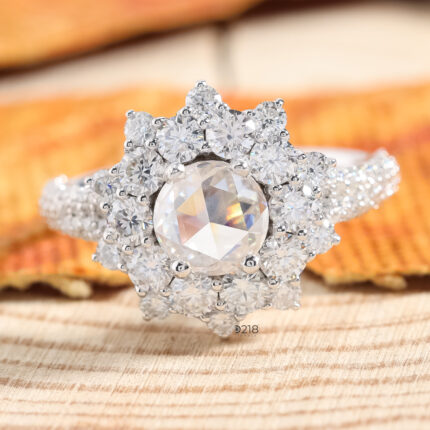
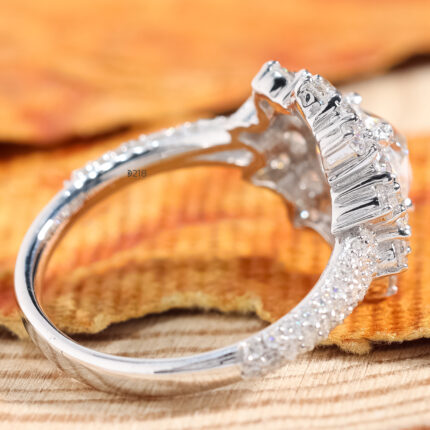


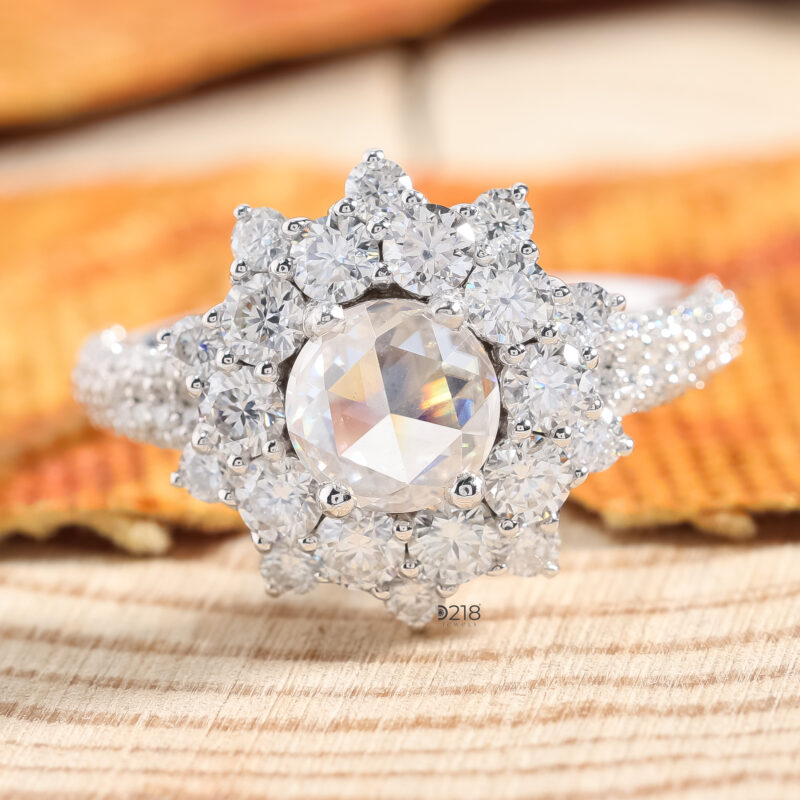
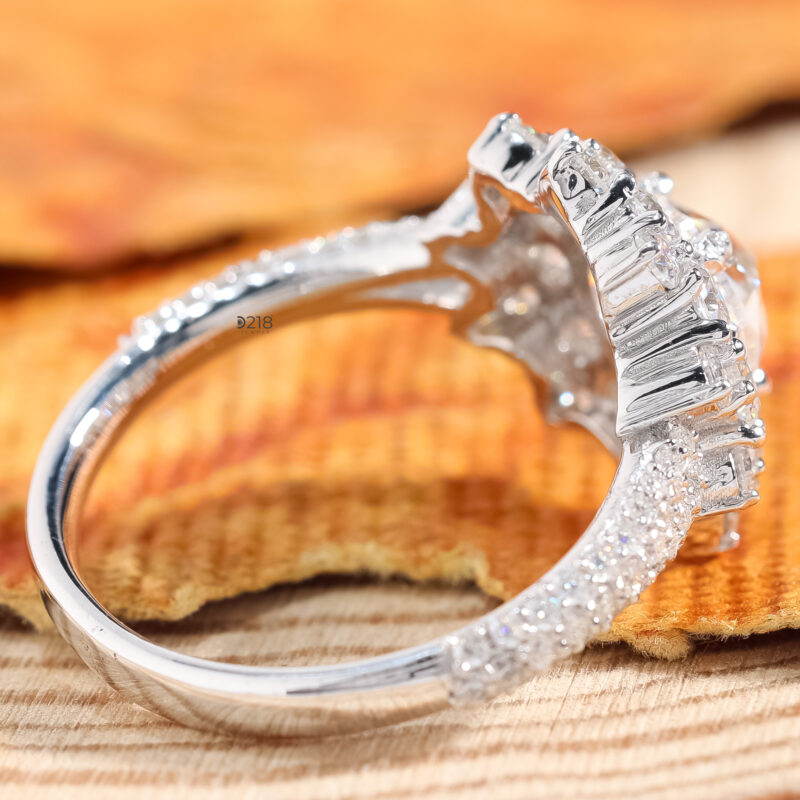
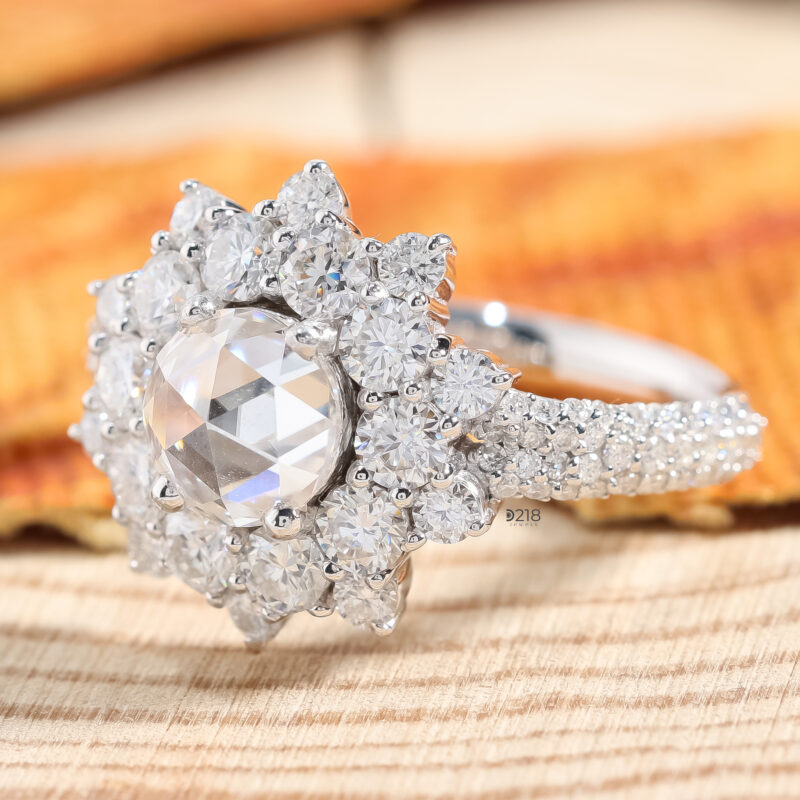
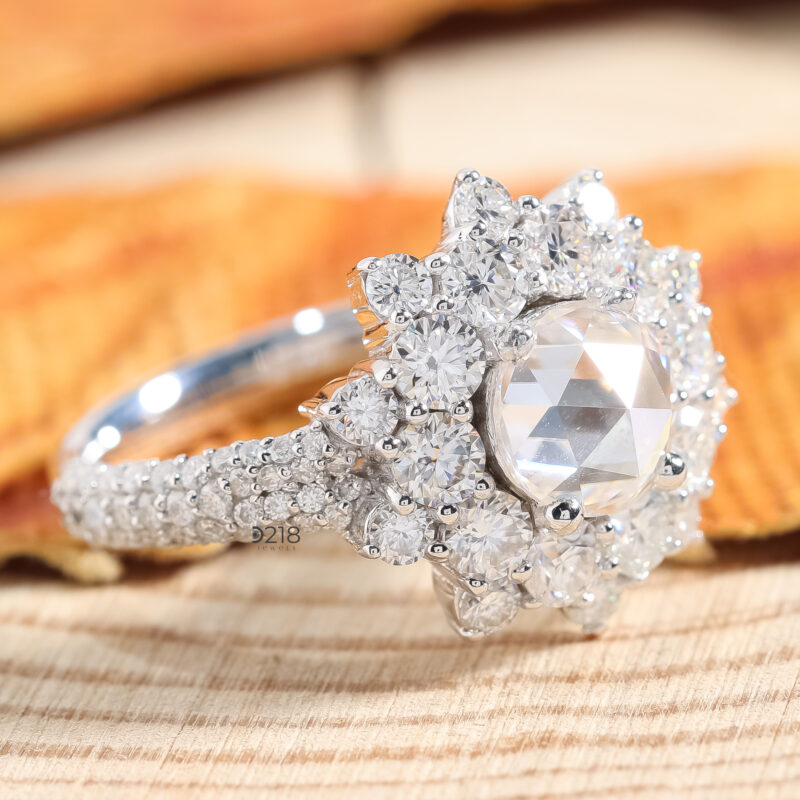
ROSE CUT HALO LAB GROWN DIAMOND ENGAGEMENT RING
Make your special moment unforgettable with this breathtaking Round Rose Cut Halo Lab Grown Diamond Engagement Ring from D218 Jewels. Featuring a beautiful 1.00 CT Round Rose Cut Lab Grown Diamond center stone surrounded by a sparkling halo of round brilliant diamonds, this ring combines vintage-inspired elegance with modern luxury.
Red Flags to Avoid When Buying Online
- No independent grading report or refusal to share the report number pre-purchase.
- Inflated “retail appraisal” discounts designed to pressure a quick checkout.
- Missing or ambiguous disclosures that hide whether a stone is natural, lab-grown, treated, or a simulant.
- Uninsured shipping or vague international return policies that leave you paying non-refundable duties or transit losses.
- No hallmarking on qualifying UK gold or platinum rings sold by UK jewelers.
Frequently Asked Questions (FAQ)
Is it safe to buy an engagement ring online in the US, UK, or Australia?
Yes, when you buy from an established jeweler that provides an independent GIA or IGI grading report, ships with full transit insurance and signature confirmation, and states its return and resizing policies clearly in writing.
Should I buy from a local online jeweler or an overseas retailer?
Buying from a retailer with local operations in your country simplifies returns, resizing, statutory consumer protections (such as UK distance selling rights or Australian Consumer Law guarantees), and avoids unexpected border duties or import declarations. If you order internationally, confirm whether duties, VAT, or GST are included at checkout.
How do I convert ring sizes between the US, UK, and Australia?
The US uses numerical sizes while the UK and Australia use alphabetical sizes. Because sizing charts vary slightly across jewelers, measure the inner diameter of a well-fitting ring in millimeters and match it to the specific retailer’s official chart before ordering.
Which of the 4Cs matters most when shopping online?
Cut quality has the biggest impact on brilliance and sparkle, according to GIA. Prioritizing an Excellent or Ideal cut helps the diamond look bright and lively even if you choose slightly lower color or clarity grades to stay within budget.
How can I verify that my online diamond’s lab certificate is genuine?
Type the unique report number directly into GIA Report Check or IGI Report Verification and confirm every detail matches the listing. After delivery, have a local jeweler confirm the matching laser inscription on the diamond’s girdle under 10x magnification.
How early should I order an engagement ring online?
Order at least 4 to 6 weeks before your planned proposal—or 6 to 8 weeks for bespoke designs or cross-border orders—to leave room for production, customs clearance, post-delivery inspection, and any resizing.
Ready to Shortlist Your Ring?
Keep this checklist open as you compare stones, verify lab reports, and weigh retailer policies across the US, UK, or Australia. Focusing on cut quality, independent certification, and clear consumer protections takes the guesswork out of buying an engagement ring online.